I have a broad interest in the general research of galaxy formation and evolution. Currently, I am focusing on dwarf galaxies with extreme properties in the nearby universe, especially ultra-diffuse galaxies (UDG) in the local universe and galaxy clusters.
Unveiling the Formation of NGC 2915 with MUSE
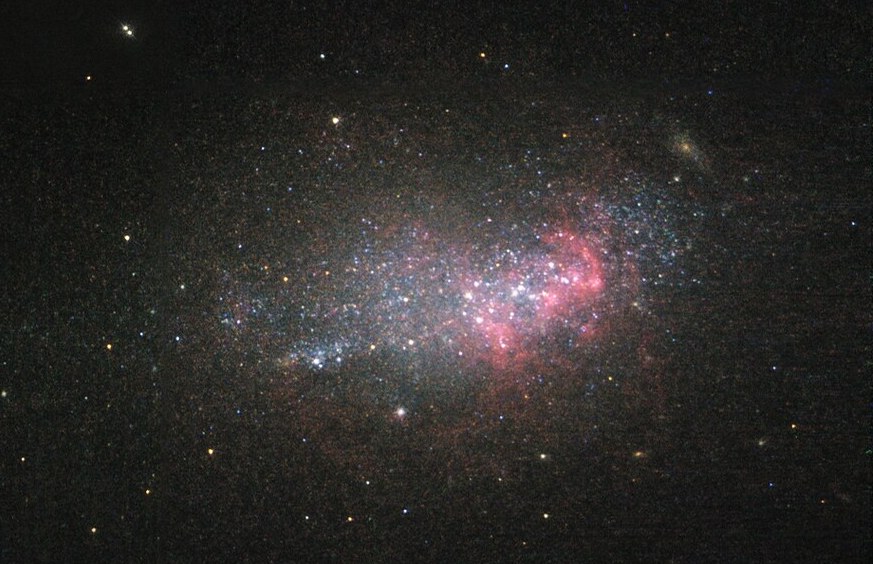
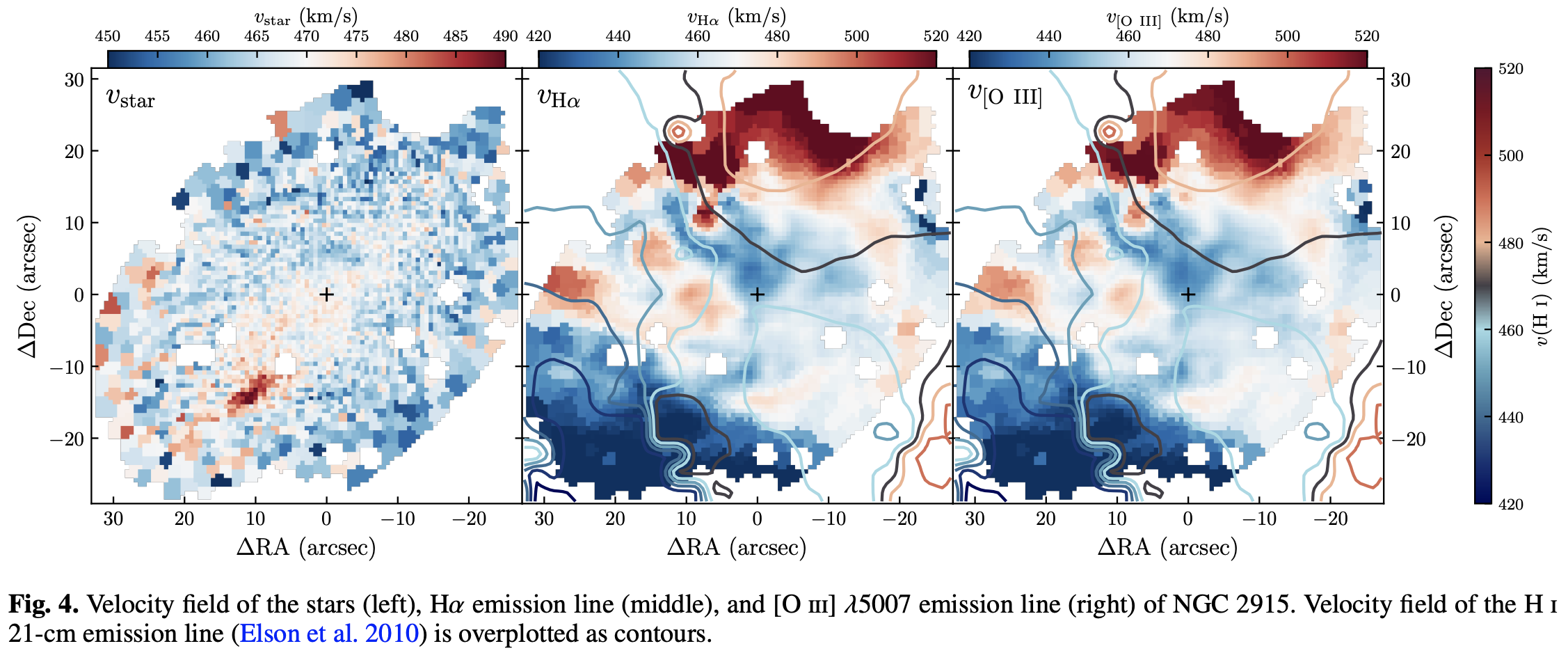
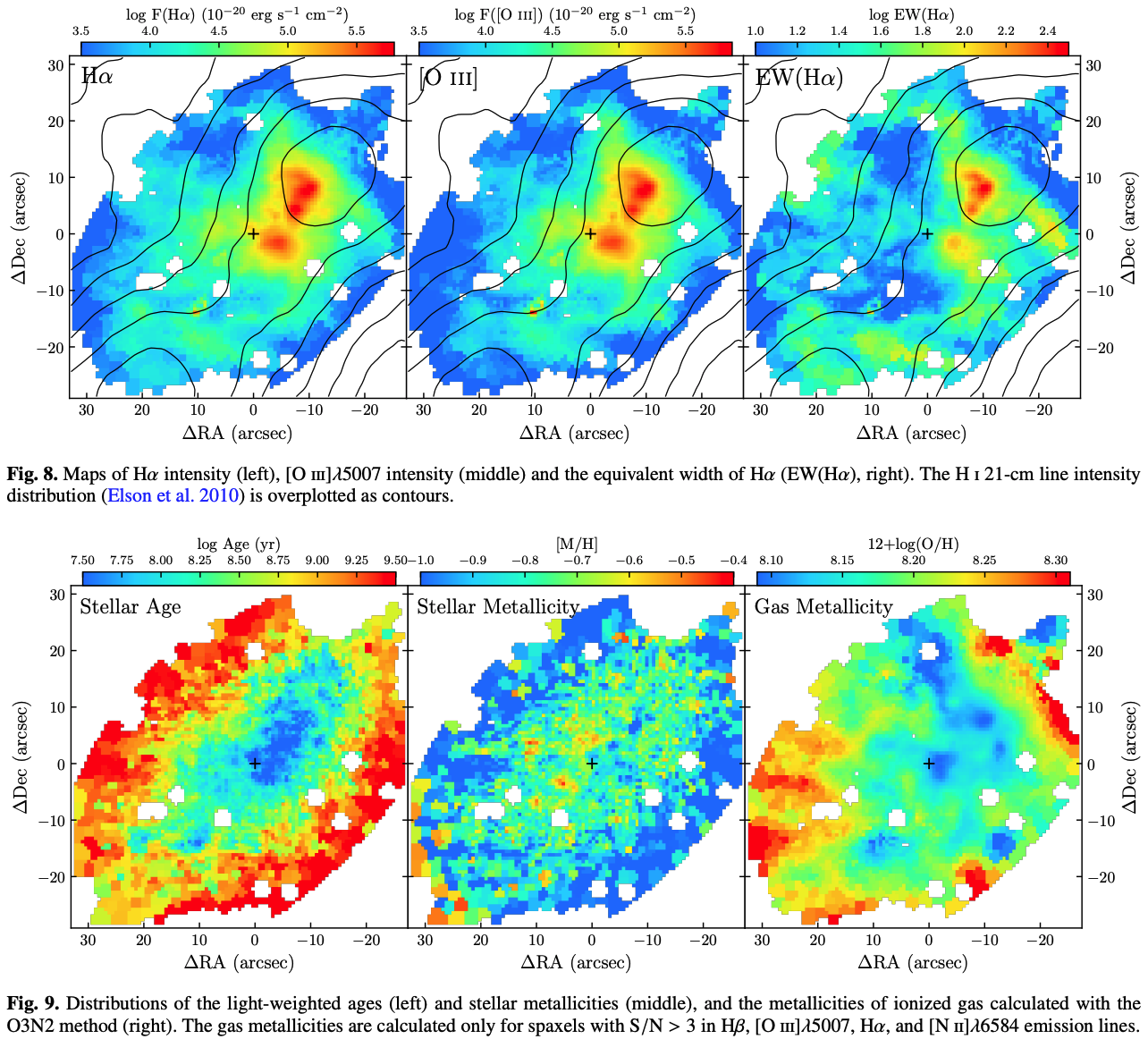
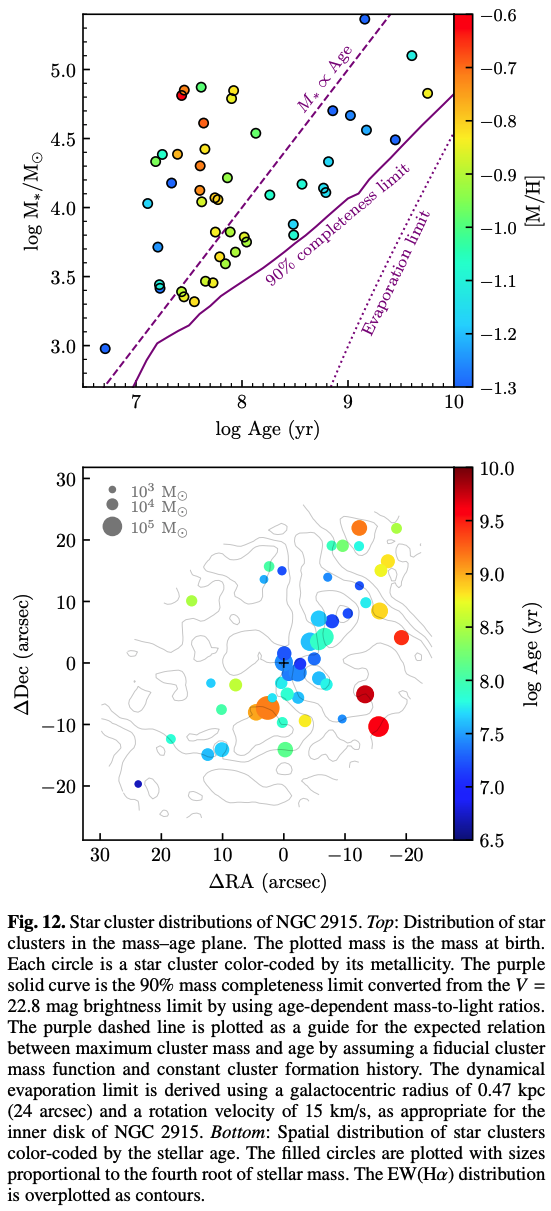
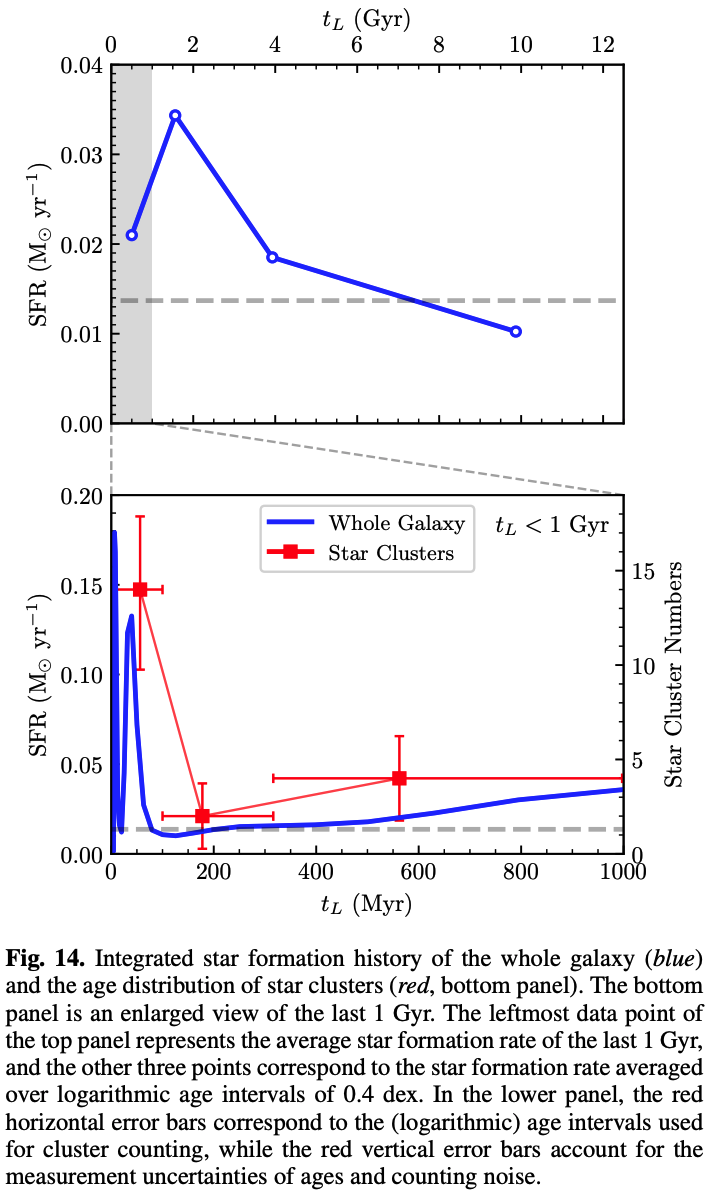
NGC 2915 is a unique nearby galaxy that is classified as an isolated blue compact dwarf based on its optical appearance but has an extremely extended H I gas disk with prominent Sd-type spiral arms. To unveil the starburst-triggering mystery of NGC 2915, we performed a comprehensive analysis of deep VLT/MUSE integral field spectroscopic observations that cover the star-forming region in the central kiloparsec of the galaxy. We find that episodes of bursty star formation have recurred in different locations throughout the central region, and the most recent one peaked around 50 Myr ago. The bursty star formation has significantly disturbed the kinematics of the ionized gas but not the neutral atomic gas, which implies that the two gas phases are largely spatially decoupled along the line of sight. No evidence for an active galactic nucleus is found based on the classical line-ratio diagnostic diagrams. The ionized gas metallicities have a positive radial gradient, which confirms the previous study based on several individual H II regions and may be attributed to both the stellar feedback-driven outflows and metal-poor gas inflow. Evidence for metal-poor gas infall or inflow includes discoveries of high-speed collisions between gas clouds of different metallicities, localized gas metallicity drops and unusually small metallicity differences between gas and stars. The central stellar disk appears to be counter-rotating with respect to the extended H I disk, implying that the recent episodes of bursty star formation have been sustained by externally accreted gas.
Related Publication:
- Yimeng Tang, Bojun Tao, Hong-Xin Zhang, et al. 2022, A&A, 668, 179T.
Unveiling the Formation of NGC 2915 with MUSE: A Counterrotating Stellar Disk Embedded in a Disordered Gaseous Environment
Main Figures:
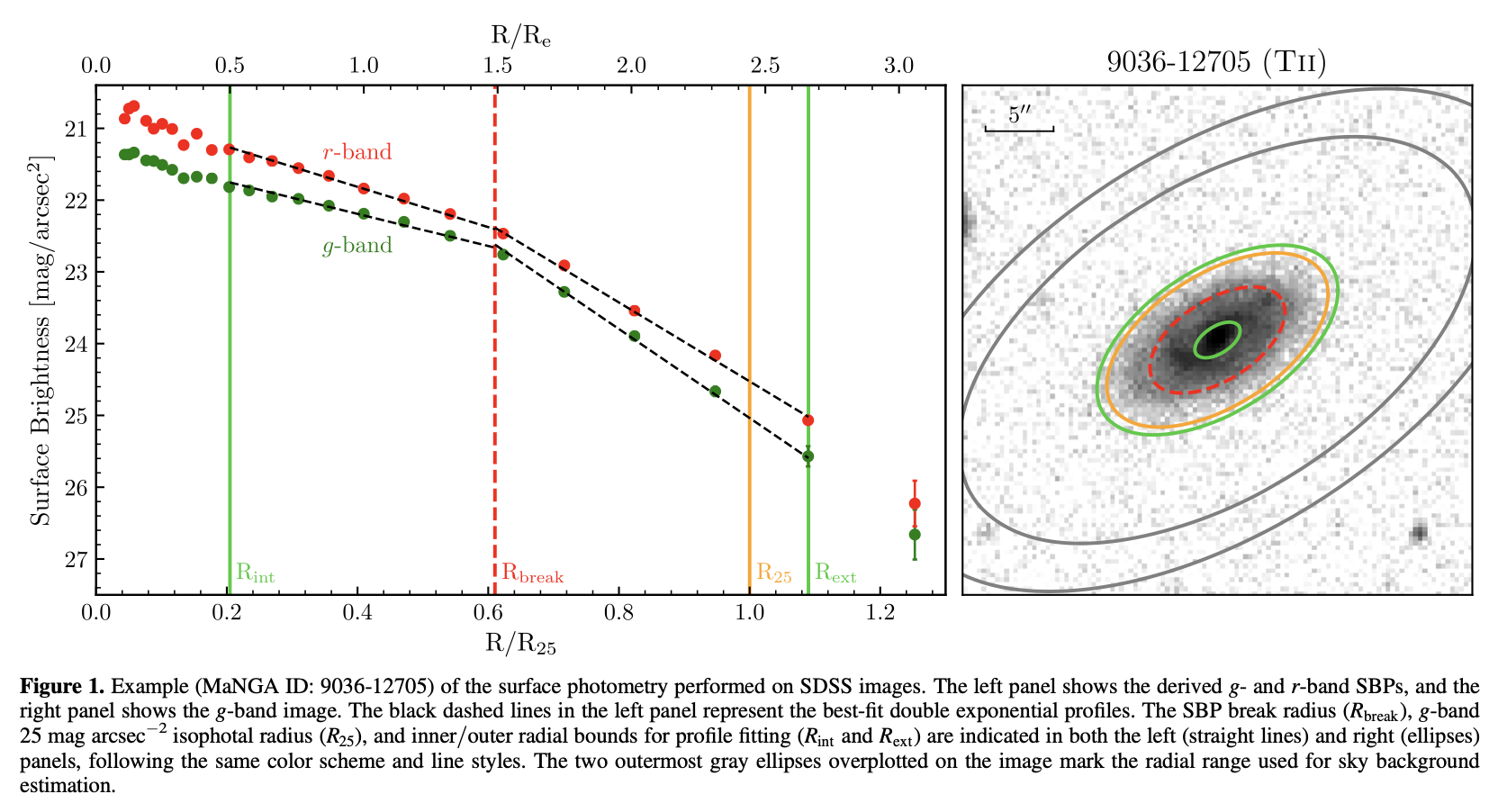
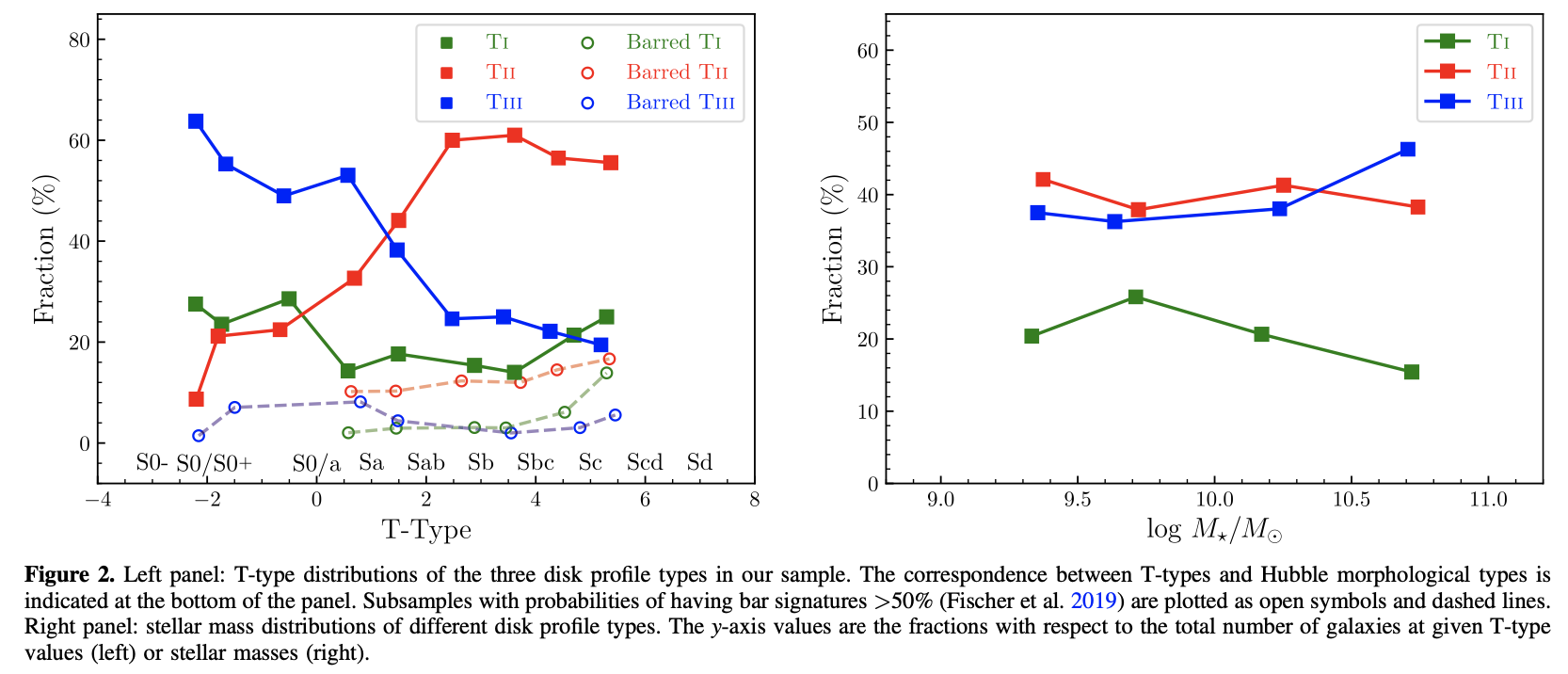
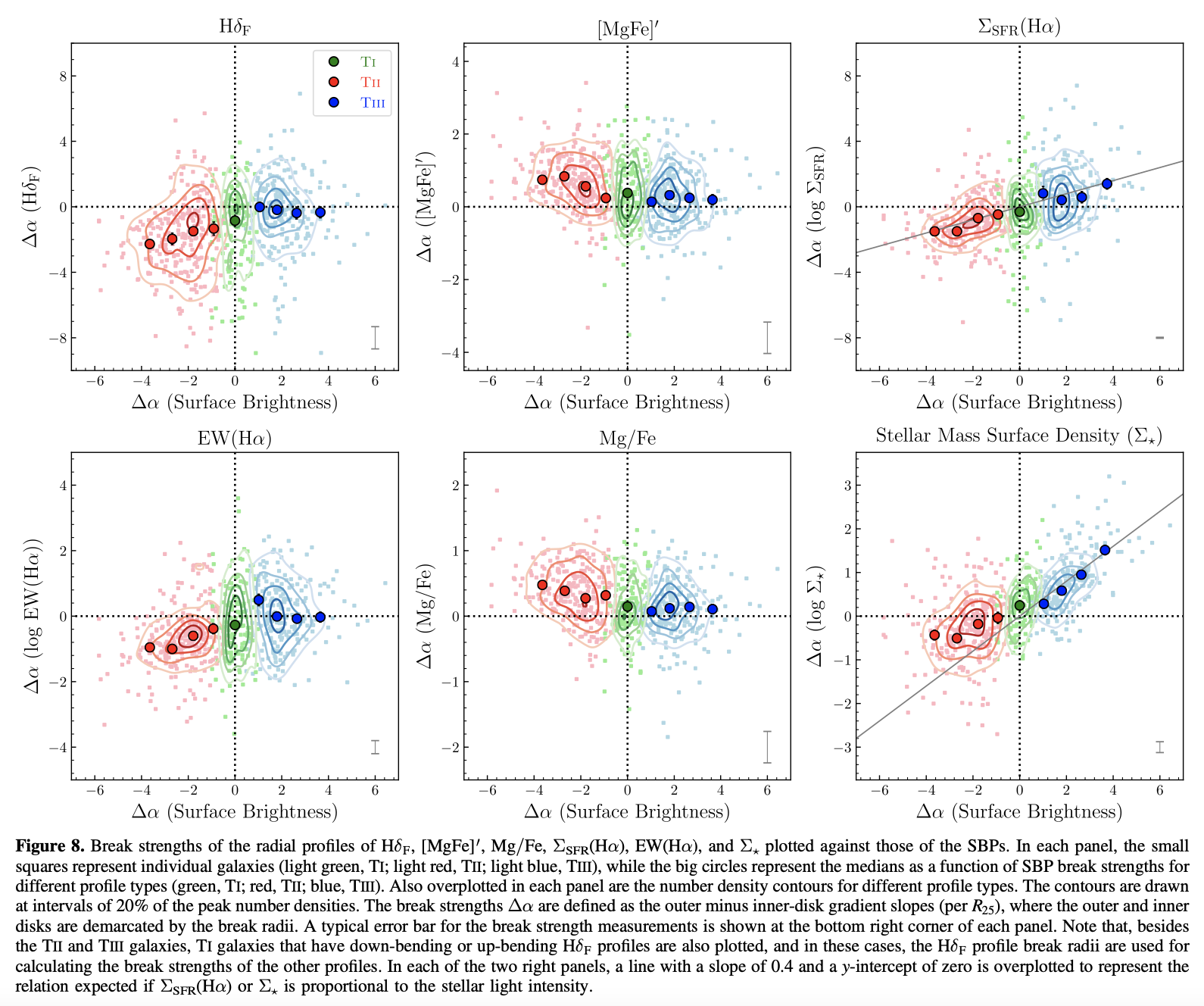
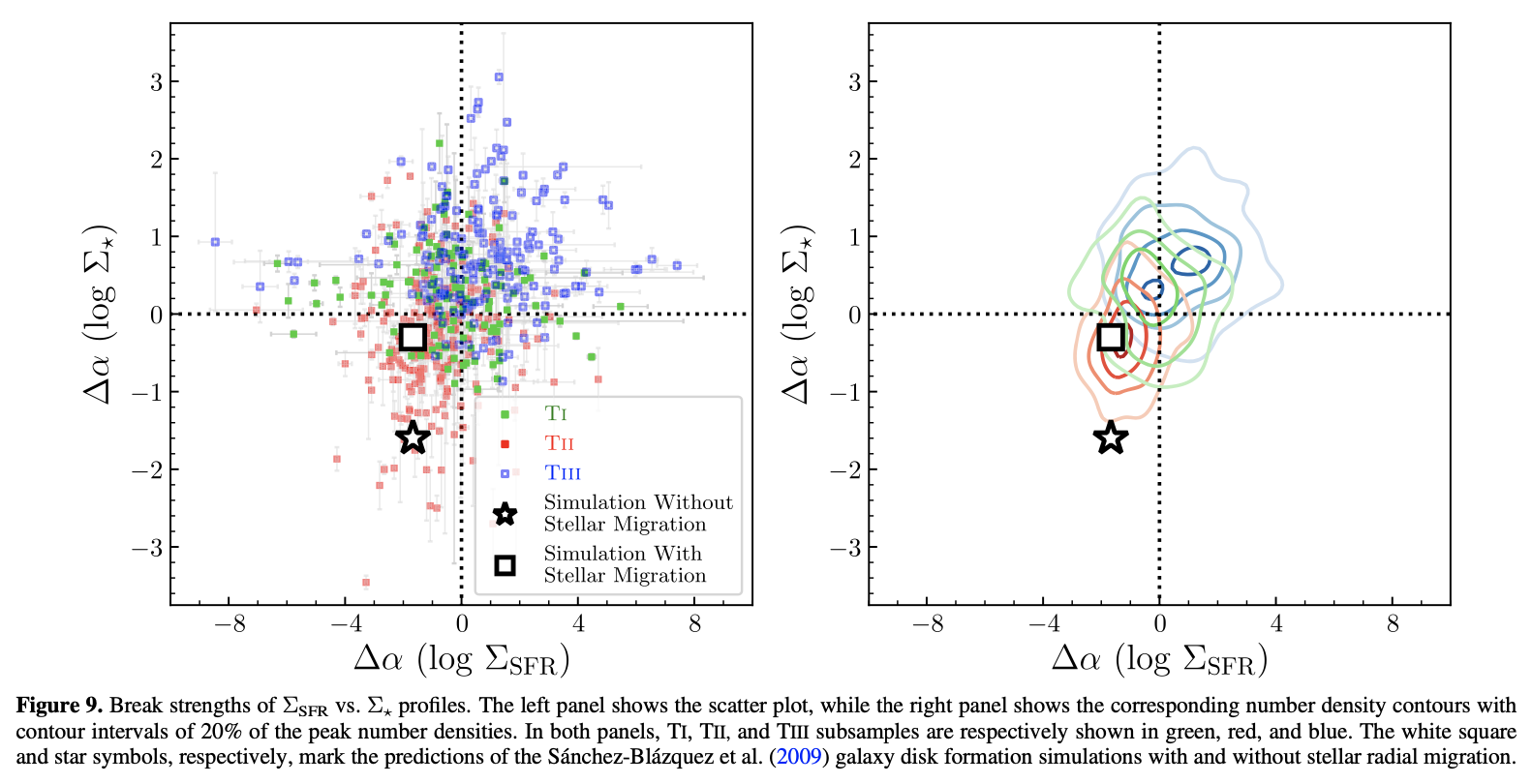
Origin of Surface Brightness Profile Breaks of Disk Galaxies from MaNGA
In an effort to probe the origin of surface brightness profile (SBP) breaks widely observed in nearby disk galaxies, we carry out a comparative study of stellar population profiles of 635 disk galaxies selected from the Mapping Nearby Galaxies at Apache Point Observatory spectroscopic survey. We classify our galaxies into single exponential (Ti), down-bending (Tii), and up-bending (Tiii) SBP types and derive their spin parameters and radial profiles of age/metallicity-sensitive spectral features. Most Tii (Tiii) galaxies have down-bending (up-bending) star formation rate (SFR) radial profiles, implying that abrupt radial changes of SFR intensities contribute to the formation of both Tii and Tiii breaks. Nevertheless, a comparison between our galaxies and simulations suggests that stellar migration plays a significant role in weakening down-bending stellar mass surface density profile breaks. While there is a correlation between the break strengths of SBPs and age/metallicity-sensitive spectral features for Tii galaxies, no such correlation is found for Tiii galaxies, indicating that stellar migration may not play a major role in shaping Tiii breaks, as is also evidenced by a good correspondence between the break strengths of stellar mass surface density and SBPs of Tiii galaxies. We do not find evidence for galaxy spin being a relevant parameter for forming different SBP types, nor do we find significant differences between the asymmetries of galaxies with different SBP types, suggesting that environmental disturbances or satellite accretion in the recent past do not significantly influence the break formation. By dividing our sample into early and late morphological types, we find that galaxies with different SBP types follow nearly the same tight stellar mass–R25 relation, which makes the hypothesis that stellar migration alone can transform SBP types from Tii to Ti and then to Tiii highly unlikely.
Related Publication:
- Yimeng Tang, Qianhui Chen, Hong-Xin Zhang, et al. 2020, ApJ, 897, 79T.
New Constraints on the Origin of Surface Brightness Profile Breaks of Disk Galaxies from MaNGA
Main Figures: