Josephine McCracken
Josephine Clifford McCracken was not only an integral facet of Santa Cruz film history, but to the history of California itself. She was a writer, poet, environmentalist, and benefactor to many artists and actors who were active at the time. She was a contemporary to such individuals as Bret Harte, the great Californian writer whose poems inspired many a silent film including Romance of the Redwoods and Lily of Poverty Flat, John Muir, the famed environmentalist, and Ambrose Bierce, the infamous journalist and critic. Her work for the Overland Monthly, a magazine based in California which included work from such writers as Mark Twain and William Saroyan, propelled her into the good graces of the highly active Bay Area literary community.
McCracken has a unique connection to Santa Cruz history. In 1880, she bought 26 acres around the summit, in what is now referred to as the Loma Prieta community, and built a house there. It was later destroyed by a fire, and this prompted her awareness about preserving redwoods. She would go on to work with Andrew P. Hill in starting the Sempervirens Club and passing legislation to protect the trees within Big Basin National Park. Her involvement with Santa Cruz silent film was as a benefactor and promoter of the area as a viable location. In my interview with local historian Randall Brown, he spoke of her influence within the county: “Her initial role was indirect. She covered the local theater events for the local papers. The local theater events of 1913 and 14 were high school events. The senior class showed some talent, and it just so happened that Zasu Pitts was one of them. McCracken gets involved that way and when Zasu graduates in 1914, she stayed in town for a while and did not initially attend college. Meanwhile, that summer, is when they first came to Boulder Creek to film outdoor shots for Salomy Jane, and thats when McCracken gets involved with Poverty Flat. The Bret Harte connecti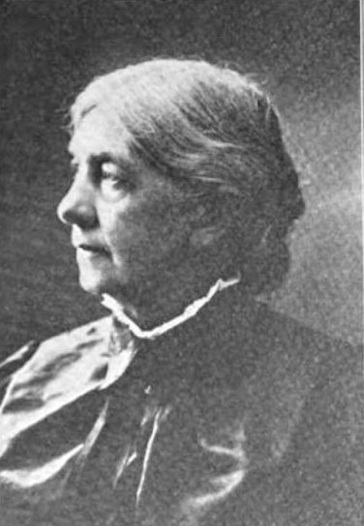 on is what wins her over. Her involvement energizes everybody working on the film. McCracken then uses her connection with the movie company to bring Zasu out to the set, and introduces her to Michelena and to the movie business. Shortly after that is when Zasu decides to go to Hollywood…” She would end up writing an amazing article juxtaposing Bret Harte’s poem about the Lily of Poverty Flat with the actual outdoor set, and exploring its possibilities as a useful industry mainstay.
However, her initial contribution was finding talent in Zasu Pitts and introducing her to the right people. Brown goes to explain the connection between Josephine and Mary Pickford: “Mary Pickford comes to town and then recognizes Zasu’s talent and gives her a screen test for Rebecca (Rebecca of Sunnybrook Farm), and then hires her for little princess. Zasu practically winds up stealing the show from Mary Pickford, which is probably why she doesn’t end up doing another Mary Pickford film. You didn’t do that. McCracken routinely promotes California Motion Picture films when they film here. She had a really good relationship with Michelena, and supported her in her own brief writing career. McCracken then gets very involved with the filming for Mothers of Men, she was quite the feminist. Mary Pickford comes to town and she’s beginning to experience the problems associated with fame. She really didn’t want to be bothered. She invites McCracken to come talk with her because of the Bret Harte connection. They hit it off, and the grandmotherly aspect of Josephine attracted Pickford. She had a lot to do with promoting the area in terms of the film industry, by forging these relationships.” Contrary to popular belief, Brown believes McCracken had a much larger role in promoting this short-lived industry than Fred Swanton, another important individual in Santa Cruz history.
McCracken passed away at the age of 82 in 1921, leaving behind a prolific body of work that paved the way for female journalists not only on the west Coast but throughout the world. Her support for Pitts, Michelena and Pickford surely jumpstarted an awareness of the filmmaking in Santa Cruz, however long it lasted. The early film industry displayed a particularly positive track record for including women in every facet of the business, and McCracken was an inspiring figure.