Geometry can be thought of as the study of shapes and measurements. In this course we will explore the effect of an axiomatic foundation of geometric models. Other key concepts are transformations and the invariants associated with them.
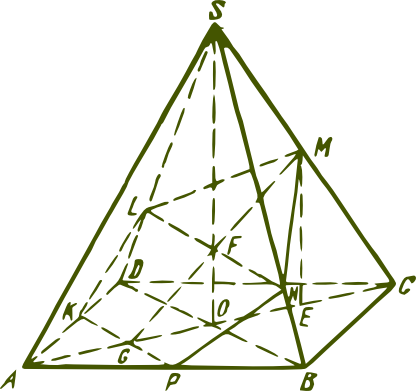
Geometry can be thought of as the study of shapes and measurements. In this course we will explore the effect of an axiomatic foundation of geometric models. Other key concepts are transformations and the invariants associated with them.
C
L
A
S
S
G
O
A
L
S
COMMUNICATION

Messages and announcements will be done using Canvas. When you need to contact your instructor, please use Canvas as email messages will NOT be replied. This is to make communication more efficient.

We will use Piazza for questions regarding HW, exams, lectures, etc. This tool is great for collaboration and to write math. It is difficult to type math in an email or in Canvas, so use Piazza for all content related questions!

For anything else, you can reach your instructor using email, but please use this as the LAST method of communication.
RESOURCES
Grade
Grades will be assigned using the +/- system.
Work (25%)
HW quizzes (15%)
Mathematical skills need practice to be developed. We will have individual HW once a week. You are encouraged to collaborate in HW, but submission is individual.
Every week I will post problems and exercises on Canvas. You will create a HW portfolio with this. For the HW quizzes you will only submit some of the exercises in your HW portfolio. The submissions will work on a Mastery basis, i.e. you will have three opportunities to improve your solutions for everty HW quizz.
Think about your HW portfolio as a resource that you are allowed to use during your HW quizzes. You will be able to use it for the Midterm and the Final as well.
Worksheets (10%)
Collaboration and mathematical discussion is key to achieve more clear concepts. Every Friday during lecture time you will work in groups on a different worksheet. You will be assignmed a different group each week.
After collaborating and discussig with your group, you will submit your work individually. It is fine if everyone in the same group submit similar work.
Discussion (15%)
Reflections (8%)
Discussion and memory retrival is important for understanding and long-term memory. For this, every class day you will be required to fill out a reflection regarding the most important points of the previous class. Think about this as a class journal.
Commentaries (7%)
History and non-academic dsicussion is very useful in order to understand the relevance and context of mathematical results. Every week you will discuss the relevance of certain topics, events, or figures related to the class. This wil be made using the Canvas discussions.
Exams (30%)
Assessment plays an important role in memory retention and solidifying concepts. The Exams will have two parts:
Midterm (15%)
We will have one Midterm exam roughly covering the first half of the course.
April 28th
Final (15%)
The Final will be comprehensive.
June 7th
Communication (30%)
An inmportant part of mathematics is communication. Being able to effectively communicate ideas is fundamental for mathematicians. For this, you will have a written assignment and a video presentation.
Essay (15%)
This is a 3-5 page exploratory essay regarding the topic of Curvature. For ths, you can include:
Video (15%)
This is a 15-20 minute video presentation. It can be:
Peer-review (10%)
You will be assigngned a group in Canvas to peer-review their work.
Paper (5%)
You will review your group's papers and provide feedback to them.
Video (5%)
You will review your group's videos and provide feedback to them.
*Notice that the grade distribution adds up to 110%. However, grades will be assigned on a 100% basis.
Prerequisite and degree relevance
Euclidean, projective, spherical, and hyperbolic (non-Euclidean) geometries. Begins with the thirteen books of Euclid. Surveys the other geometries. Attention paid to constructions and visual intuition as well as logical foundations. Rigid motions and projective transformations covered.
Prerequisite(s): either MATH 100 or CSE 101.
The UC Santa Cruz community includes students, staff, faculty, and others who have a vested interest in the University. As members of an academic community, integrity, accountability and mutual respect are vital pillars of being part of this community. The Principles of Community further illustrate the values and expectations set forth for being a part of this community.
UC Santa Cruz is committed to creating an academic environment that supports its diverse student body. If you are a student with a disability who requires accommodations to achieve equal access in this course, please submit your Accommodation Authorization Letter from the Disability Resource Center (DRC) to me privately during my office hours or by appointment, preferably within the first two weeks of the quarter. At that time, I would also like us to discuss ways we can ensure your full participation in the course. I encourage all students who may benefit from learning more about DRC services to contact DRC by phone at 831-459-2089 or by email at drc@ucsc.edu.
We understand that our members represent a rich variety of backgrounds and perspectives. UCSC is committed to providing an atmosphere for learning that respects diversity. While working together to build this community we ask all members to: