History 150a



Presenting the Past
Administrative
DO NOT turn final exams into my mail box in Humanities Acad Services
If done early, turn in to my office, either under my door or to envelope on the door
It is not clear whether I can put a general class box out for papers on Dec. 7 in HAS so to be safe turn in to my office
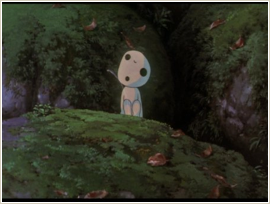
“Princess Mononoke”
(もののけ姫)
(もののけ姫)
Written and directed by Miyazaki Hayao, 1997
Challenging the “Seven Samurai” model?
Rethinking the agents of history
Rethinking the spaces of history
Rethinking the “progress” of history
Miyazaki Hayao: “Period films always only feature samurai, farmers and townsfolk: this has made history boring. I am interested in the people who roamed the mountains making iron.”
"Princess Mononoke"
Times and Spaces
What kind of journey does Ashitaka start out on?
What are the implications of where he starts and what direction he moves in?
Who and what are “central” or “peripheral”?
"Industrial" Town
Is this community portrayed in a good or bad light?
What is their relationship to "Nature"?
What is “evil”?
The Past is a Foreign Country
David Lowenthal: “However faithfully we restore, however deeply we immerse ourselves in bygone times, life back then was based on ways of being and believing incommensurable with our own. The past’s difference is, indeed, one of its charms … But we cannot but view and celebrate it through present-day lenses.”
Nationalism and the Past
“Japan is alone among the world's advanced countries in not having had the composition of its people changed since remote antiquity by the coming of any outside ethnic group. A small island nation, from tens of thousands of years ago when its population was few, [its inhabitants] cleared the mountain forests for farming, cooperatively brought in water for the wet rice fields, cooperatively built houses and experienced joy and grief together. They were all blood relatives. It is not like the case of foreign emperors in which there was a sense of the people versus the throne, since there was a unified attitude in the blood.” (Fujita Satoru quoted in Smits, p. 57)
Presenting the Past
National Character/Origins Studies
Looking for “essence”
Looking for linear continuity
Looking for causal relationship
Defamiliarization
Challenging national origins theories
Alternative social possibilities
Critiques of the present
How does one resolve tensions between looking for continuities and looking for change?
Goals of the Course
Window into a past that is unfamiliar yet not (I hope) incomprehensible
Acquisition of concrete knowledge of ancient Japan that
is (hopefully) interesting in and of itself
can use to assess contemporary discussions of the past
Engagement with some of the challenges in writing histories, ancient and modern
Selecting and interpreting evidence
Assessing context of narrative being told
Questions of periodization and other historiographical issues and debates not confined to Japan
Course Themes and the Final
Heterogeneity: differences over time, region and within given eras and regions
Struggle: tensions between centralization and spheres of autonomy
Politics of culture and the culture of politics
Sunday, December 3, 2006

Lecture 19: Presenting the Past